Imagine trying to turn your vehicle’s wheel without power steering and feeling like you are wrestling a heavyweight at every corner. It is the unsung hero of your daily drive, but when it fails, a simple trip becomes a stressful and dangerous safety risk. Ignoring these early warning signs leads to much higher bills down the road.
At The Power Steering Shop, we are New Zealand’s leading specialists, serving drivers from our Christchurch base and shipping parts to Auckland, Wellington, and beyond. Unlike general mechanics who often just swap expensive components, we provide specialist power steering repairs and overhauls backed by generous warranties. We pride ourselves on honest, expert service that gets Kiwis back on the road safely.
What Is Power Steering and How Does It Work?
You might wonder, what is power steering exactly? It is an assistive technology designed to reduce the physical effort needed to turn your vehicle’s steering wheel. Without it, you are relying solely on your own arm strength to move the heavy front wheels and tyres against the friction of the road.
This system uses an energy source to multiply the force you apply to the wheel, allowing you to navigate tight parking spots with just a light touch. Understanding which type of system your car uses helps you spot problems early.
Hydraulic Systems
For many years, hydraulic systems have been the standard for most older and heavy vehicles on the roads. This system relies on a belt-driven pump that circulates hydraulic fluid under high pressure. When you turn the wheel, this pressure helps push the steering rack in the desired direction.
A hydraulic system is purely mechanical and fluid-based, providing excellent road feedback that many driving enthusiasts prefer. However, they rely heavily on hoses, seals, and the condition of the fluid to function correctly. If the fluid level drops or a hose cracks, the assistance disappears instantly.
Electric Power Steering (EPS)
Modern motor-driven vehicles are shifting away from hydraulic setups in favour of electric motors. In an EPS system, sensors detect the steering column’s motion and torque as you turn the wheel. A computer then tells an electric motor exactly how much force to apply to assist you.
There is no fluid to leak and no pump to wear out, improving fuel efficiency. While generally reliable, electrical faults or sensor failures can still cause issues that require expert attention.
Why It Matters on NZ Roads
New Zealand roads are unique, and your power steering system is constantly working to manage these conditions. A responsive system makes sure you can swerve safely to avoid a hazard or correct your line on a wet corner. When the system functions correctly, you feel connected to the road. When it fails, you lose that vital connection and control, which poses a danger.
5 Warning Signs You Need Power Steering Repairs
Your vehicle will usually tell you when something is wrong before it completely fails. You just need to know what to listen to and what to look for. Catching these signs early can save you from a complete system replacement:
Strange Noises (Whining/Groaning)
If your vehicle starts sounding like it is in pain when you turn a corner, pay attention. A whining or groaning sound is the most common indicator of hydraulic issues. This noise typically occurs when the pump is starved for fluid or when air has entered the lines. It might start as a faint whine when the car is cold, but it will get louder as the problem worsens.
Heavy or Stiff Steering
The most obvious sign of trouble is a change in physical resistance. If the wheel feels stiff or heavy, especially when you are moving slowly, your assistance system is failing. In hydraulic setups, this often indicates a pressure drop or a failing pump. Further, stiffness makes it incredibly difficult to respond quickly in an emergency.
Leaking Fluid
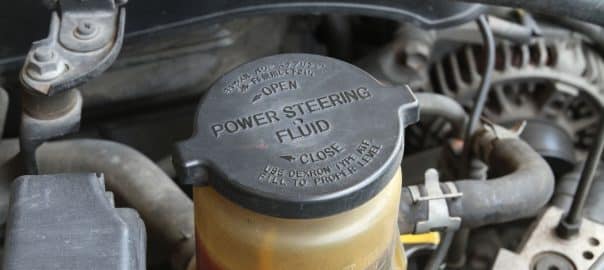
Puddles on your driveway are never a good sign. Power steering fluid is typically red or pink, though it can turn brown or black as it ages and gets dirty. If you spot red drops near the front of your car, you likely have a leak in the high-pressure hose, the pump, or the steering rack seals. Leaks do not fix themselves and will only get larger over time.
Steering Wheel Vibration
A vibrating steering wheel is often blamed on tyre balance, but it can also signal steering system faults. If the wheel shudders or jerks when you turn it, the drive belt might be loose or slipping. In more serious cases, it indicates a lack of hydraulic pressure reaching the rack. This vibration causes driver fatigue on long trips and needs immediate inspection.
“Wandering” Steering
A healthy car should track straight when the wheel is centred. If you find yourself constantly correcting the wheel just to stay in your lane, you have “wandering” steering. This indicates worn tie rod ends or excessive play in the steering rack itself. The connection between your steering wheel and the road wheels has become loose.
Steering Rack Repairs: The Heart of the System
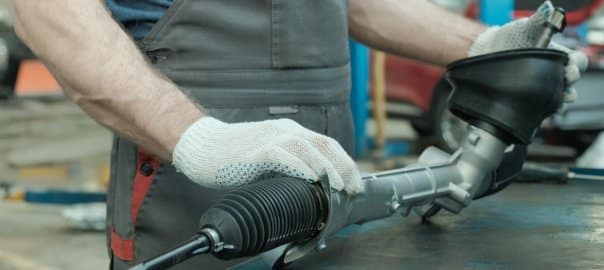
The steering rack is the central component that translates your rotational movement of the steering wheel into the lateral movement of the road wheels. It is a sturdy metal bar with gear teeth, enclosed in a metal casing. Despite its durability, it is subject to immense pressure and wear. Steering rack repairs are a specialised field because of the precision required to get them right.
Repair vs. Replacement
Many general mechanics will suggest a full replacement when a rack develops a leak or a knock. New original manufacturer racks are incredibly expensive, costing thousands of dollars. Used or second-hand racks are a gamble because you don’t know if they have the same hidden issues as the one you are replacing. This leaves vehicle owners feeling like they have no affordable options.
The Specialist Advantage
At The Power Steering Shop, we focus on steering rack repairs. A specialist can strip your existing unit down to its core components. We inspect the hard-chrome shaft, replace all seals with high-quality equivalents, and pressure-test the unit. This process is sustainable and cost-effective, as it focuses on fixing the root cause rather than just swapping parts.
The Process
A proper overhaul involves rigorous testing. The rack is disassembled, and every component, like new seals, is cleaned and measured. and installed. The unit is then subjected to a pressure test simulating the pressures encountered during driving.
This ensures that when the rack is reinstalled in your vehicle, it will perform flawlessly. Steering rack repairs carried out this way ensure longevity and safety.
Safety First: Can You Drive With a Faulty Power Steering?
One common question drivers ask is: Can you drive with a faulty power steering? Technically, yes, but it is highly dangerous and not recommended. While the car will still physically turn, the effort required is substantial.
The Risks
Driving with a compromised system introduces serious hazards that affect your safety and your vehicle’s health:
- Inability to swerve quickly in an emergency. Without assistance, turning the wheel fast enough to avoid a child, animal, or another vehicle becomes nearly impossible for most drivers.
- Driver fatigue. Fighting the wheel at every turn is physically exhausting, leading to slower reaction times and reduced focus on longer journeys.
- More damage to the rack or pump. Driving with low fluid causes friction and heat, turning a simple seal repair into a full system failure that costs significantly more to fix.
Legal/WOF Implications in NZ
In New Zealand, your steering system is a critical check for the Warrant of Fitness (WOF). Any significant leak, excessive play, or stiffness in the steering will result in an immediate fail. Inspectors look for damaged dust boots, worn tie rod ends, and fluid leaks. Hence, keeping your power steering in top condition is essential for keeping your vehicle legal on the road.
Why Choose The Power Steering Shop?
When your steering plays up, you might be tempted to visit the nearest general garage. However, steering systems are intricate and demand specific knowledge to diagnose correctly. Picking a dedicated specialist like The Power Steering Shop saves you time, money, and stress.
Specialist Expertise Over General Mechanics
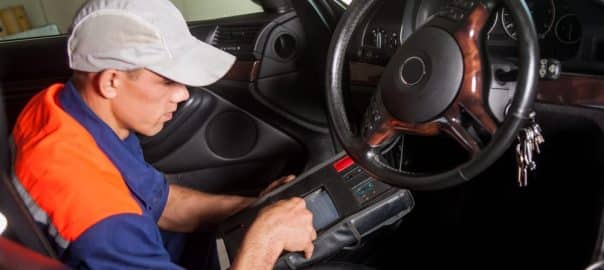
The Power Steering Shop focuses entirely on one thing: steering. We know the common faults in specific makes and models. Also, we can handle passenger cars, vans, and light trucks with diagnostic equipment to accurately read pressure levels.
Fast Turnaround & Generous Warranties
We know you need your vehicle for work, school runs, and daily life, and being without it is a major hassle. That is why we aim for speed without rushing the quality.
For many standard steering rack repairs or pump fixes, we aim to have your vehicle “back on the road the next day.” We stand behind our workmanship with generous warranties because we trust the quality of our parts and our labour, giving you safety and comfort.
Affordable & Accessible
We believe every Kiwi deserves a safe vehicle. The Power Steering Shop offers free quotes for the Work and Income NZ (WINZ) service. This is a huge trust signal for the local community, as many global competitors or dealerships do not offer this service. We make the process easy and provide transparent pricing upfront so you can get the funding you need for essential repairs.
Don’t Wrestle With Your Wheel
Your driving experience should be enjoyable, and power steering is vital to the safety and comfort of every journey. Ignoring the warning signs like a strange noise, a fluid leak, or a stiff wheel only leads to bigger bills and potential WOF failures.
You deserve a vehicle that responds instantly to your touch to remain safe on New Zealand’s diverse roads. Whether you need a simple fluid top-up or complex steering rack repairs, contacting The Power Steering Shop is your first step toward a safer drive.
Common Questions in New Zealand about Power Steering
What is the most common cause of power steering failure?
Fluid neglect is the leading cause of failure. Just like engine oil, steering fluid breaks down over time, attracting moisture and debris that eats away at rubber seals. Regular servicing is the best way to prevent these issues.
Why does my power steering fluid keep running out?
Power steering is a sealed system, so it should not consume fluid like an engine consumes fuel. If you are constantly topping it up, there is a leak from a hose, pump, or rack that needs immediate repair.
How much does it cost to fix a power steering fault?
Costs vary from a small fee for a hose replacement to more for full steering rack repairs. Specialists like us offer a price-beat guarantee over general mechanics because we can rebuild components rather than forcing you to buy new ones.